ISO 9950 — Industrial Quenching Oils Cooling Curve Standard
The foundational international standard for ranking the cooling behaviour of industrial quenching oils.
What is ISO 9950?
ISO 9950:1995(E) — officially titled "Industrial quenching oils — Determination of cooling characteristics — Nickel-alloy probe test method" — is the original, internationally recognised benchmark for measuring the cooling behaviour of industrial quenching oils under still (non-agitated) conditions.
Published by the International Organization for Standardization, this standard defines the reference test procedure adopted by quench oil manufacturers, heat-treatment laboratories, and metallurgical facilities worldwide. It forms the technical foundation upon which ASTM D6200 and subsequent standards are built.
The primary purpose of ISO 9950 is the comparison of quenching oils against each other and against a reference fluid, not absolute prediction of cooling rates in industrial agitated tanks. By maintaining consistent test conditions, laboratories across continents produce directly comparable results.
Apparatus & Key Specifications
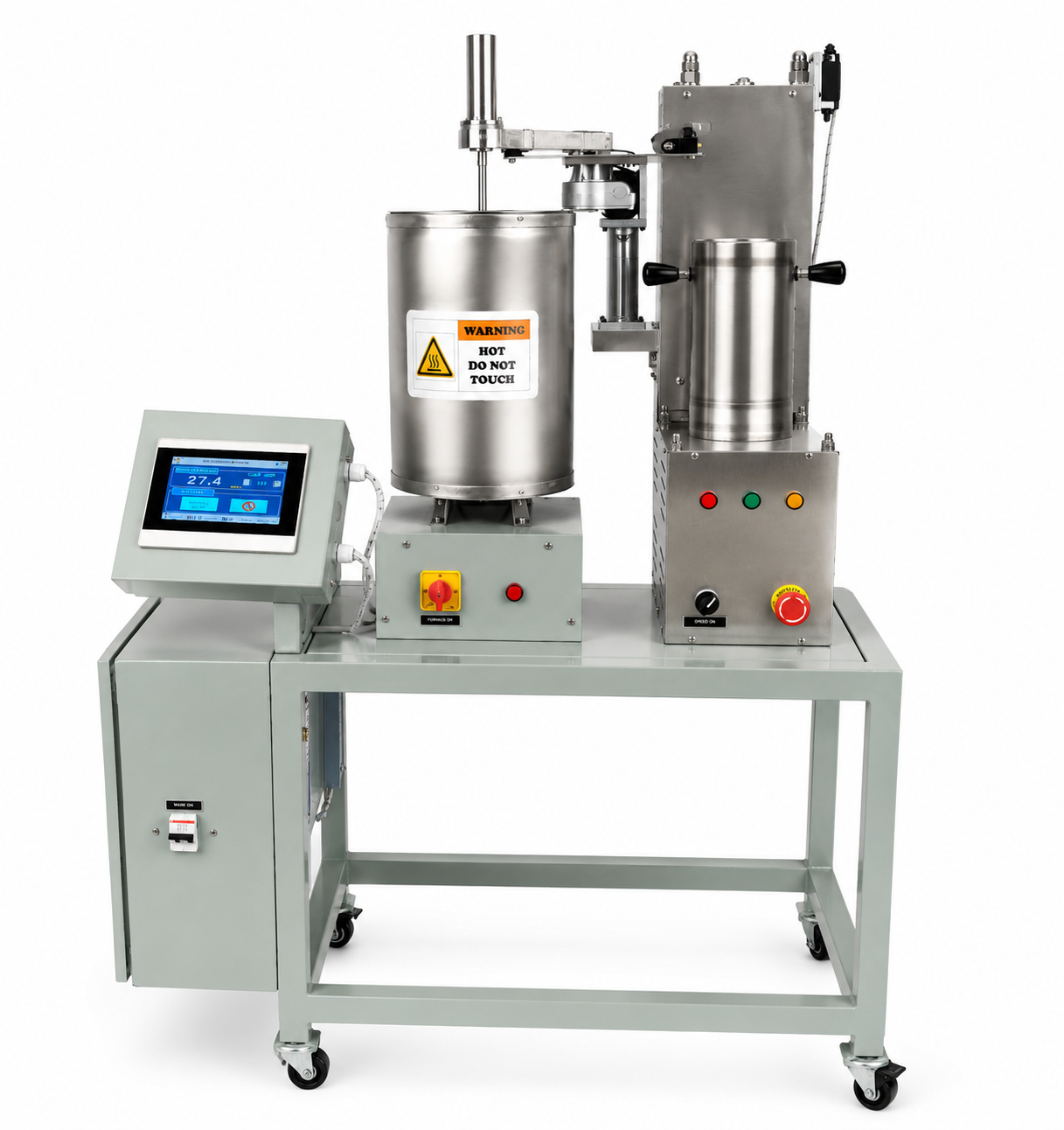
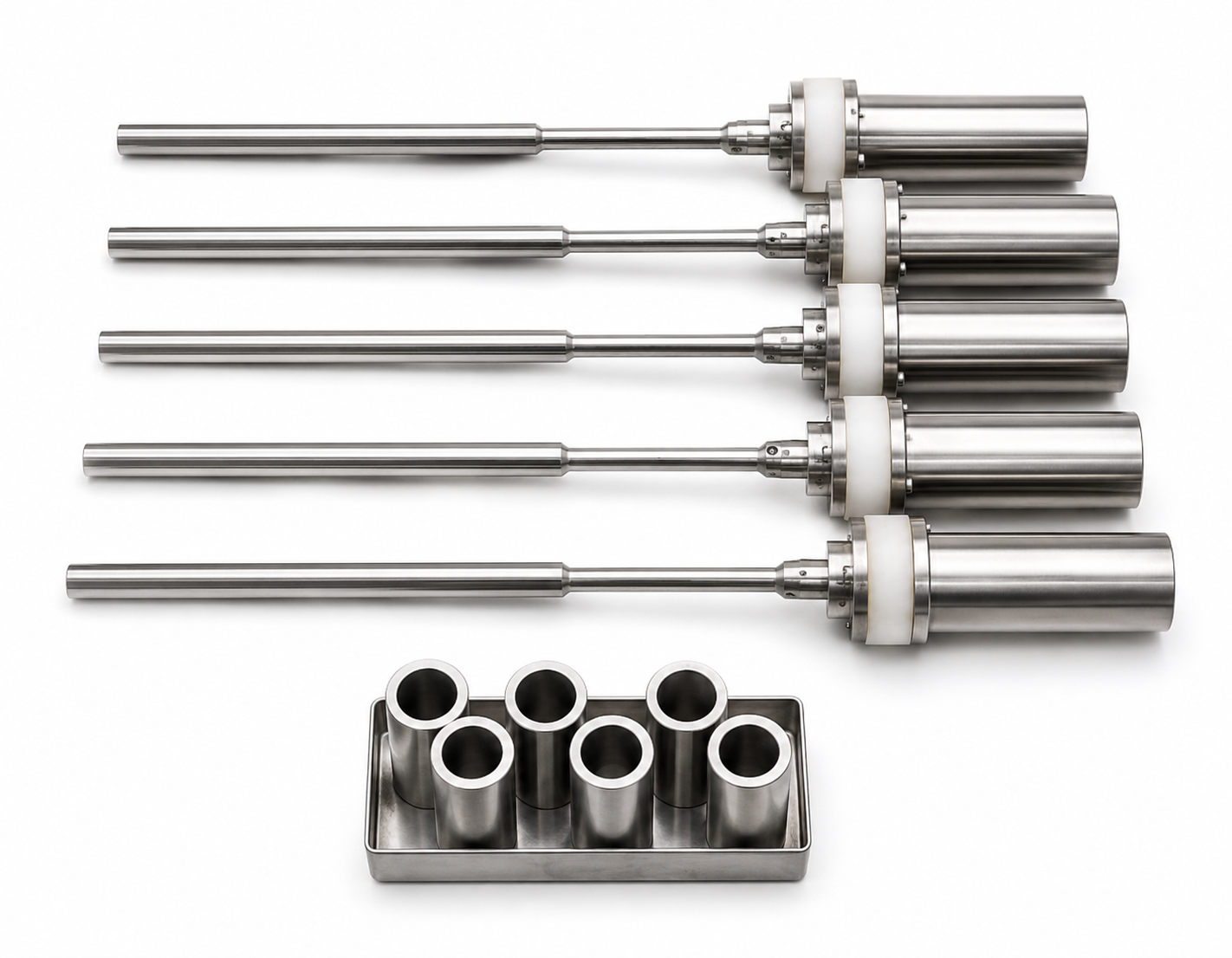
ISO 9950 mandates the following apparatus — all requirements are met by ProVaC's Pro-Quenchometer platform.
Reported Parameters
ISO 9950 requires the following parameters to be calculated and reported for each test run. ProQuench software computes all of these automatically.
Reference Fluid Limits
These acceptance limits must be met when testing the calibration reference fluid — verifying equipment and probe are within specification.
Who Uses ISO 9950?
From global quench oil producers to aerospace forging shops — ISO 9950 is relied upon across industries where quenchant quality directly impacts part performance and process safety.
Quench Oil Manufacturers
Certify and quality-test quench oil batches per ISO 9950 before dispatch. Generate internationally recognised test certificates accepted by customers worldwide.
Heat Treatment Companies
Monitor in-service quench oil degradation and maintain ISO 9950-based quality records for traceability, process consistency, and customer audits.
Automotive Manufacturers
Qualify quench oils for gear, shaft, and structural component hardening. ISO 9950 is cited in automotive quality plans and PPAP submissions globally.
Aerospace & Defence
Validate quenching media used for critical aerospace components — landing gear, turbine discs, and airframe forgings — where quenchant consistency is safety-critical.
Metallurgical Laboratories
Run standardised quenchant characterisation studies for R&D, material qualification, failure analysis, and supplier comparison programmes.
Research Institutes & Universities
Teach and research quenchant science using the original international benchmark. ISO 9950 is the most widely cited standard in quenching literature and academic curricula.
Does your industry rely on ISO 9950? ProVaC has the right solution for you.
How ProVaC Enables ISO 9950 Compliance
Every aspect of ISO 9950 is directly addressed by ProVaC's Pro-Quenchometer, Inconel Probes, and ProQuench V3 software.
Probe Geometry Verified
ProVaC's Inconel probes are precision-machined to the exact 12.5 mm × 60 mm geometry with NABL-traceable Type K thermocouple placement — zero deviation from ISO 9950 requirements.
Sub-2-Second Automated Transfer
The Pro-Quenchometer's world-first automatic probe transfer mechanism completes transfer within 3 seconds (faster than manual operators), meeting the ISO 9950 ≤2-second requirement reliably every test.
All Six Parameters Auto-Calculated
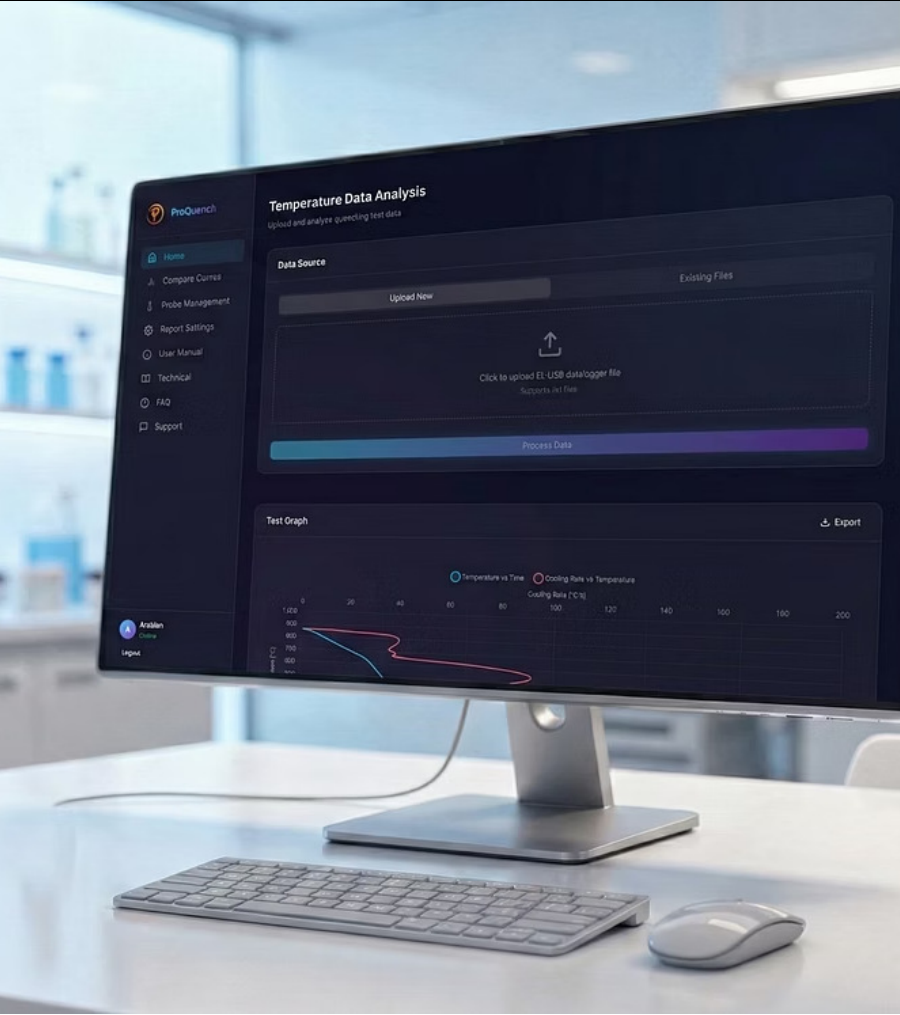
ProQuench software automatically computes CRmax, T(CRmax), CR300, Time600, Time400, and Time200 per ISO 9950, with professional PDF report generation.
Reference Fluid Validation Built-In
ProQuench includes ISO 9950 Wolfson reference fluid limits as pass/fail acceptance criteria — instantly flagging out-of-spec calibration runs.
Triplicate Test Logging
ISO 9950 requires triplicate testing. ProQuench automatically logs and averages triplicate runs, stores historical data, and flags statistical outliers.
How to Generate a ISO 9950 Compliant Report
From probe preparation to signed PDF report — a complete ISO 9950 test run with ProVaC equipment takes under 30 minutes.
Verify Inconel Probe Geometry
Mount the NABL-traceable Inconel 600 probe (12.5 mm × 60 mm) and confirm K-factor certificate. ProVaC probes are precision-machined to ISO 9950:1995 dimensional tolerances with zero deviation.
Heat Probe to 850 °C ± 5 °C
The integrated tube furnace heats the probe to exactly 850 °C with ±2.5 °C zone uniformity. Probe temperature is monitored continuously until a stable soak is confirmed before transfer.
Automated Transfer in ≤2 Seconds
ProVaC's world-first automatic transfer mechanism moves the 850 °C probe into the 2-litre oil bath within 2 seconds — meeting the ISO 9950 transfer time requirement every single test without manual handling.
Cooling Curve Data Acquisition
NABL-certified sensors record the temperature-time cooling curve at ≥20 samples per second. All raw data is automatically timestamped and saved to ProQuench software for analysis.
Auto-Calculate All 6 Parameters
ProQuench automatically computes CRmax, T(CRmax), CR300, Time600, Time400, and Time200 per ISO 9950 — no manual calculation. Triplicate runs are averaged and statistical outliers are flagged automatically.
Generate ISO 9950 Compliant PDF Report
A professional ISO 9950 compliant PDF report is generated with the cooling curve graph, all six parameters, Wolfson reference fluid comparison, and full test metadata — ready for quality audit submission.
Ready to Achieve ISO 9950 Compliance?
ProVaC's Pro-Quenchometer is precision-engineered to meet every requirement of ISO 9950:1995(E). Talk to our quenching technology experts for a tailored compliance solution.