ASTM D7646 — Polymer Quenchant Testing for Aluminum Alloys (Silver Probe)
Purpose-built for aluminum alloy heat treatment — a silver probe at 500 °C, serving automotive, aerospace, and extrusion industries.
What is ASTM D7646?
ASTM D7646-23 — "Standard Test Method for Determination of Cooling Characteristics of Aqueous Polymer Quenchants for Aluminum Alloys by Cooling Curve Analysis" — is a purpose-built standard for the aluminum alloy heat treatment industry. It addresses a fundamentally different process from steel quenching: aluminum alloys operate at much lower solution treatment temperatures (around 500 °C versus 850 °C for steel), have much higher thermal conductivity, and require different quenchant properties to achieve the desired microstructural results.
Because aluminum's heat treatment characteristics differ so significantly from steel's, the standard uses a pure silver probe (≥99.99%) rather than Inconel. Silver's much higher thermal conductivity matches the thermal response of aluminum alloys, making results far more representative of actual aluminium quenching conditions.
D7646 introduces the "characteristic temperature" — the transition point from the vapour-blanket phase to the rapid-cooling nucleate boiling phase — as a key parameter unique to aluminum quenching science. This is the industry's most recent ASTM quenching standard, revised in 2023.
Apparatus & Key Specifications
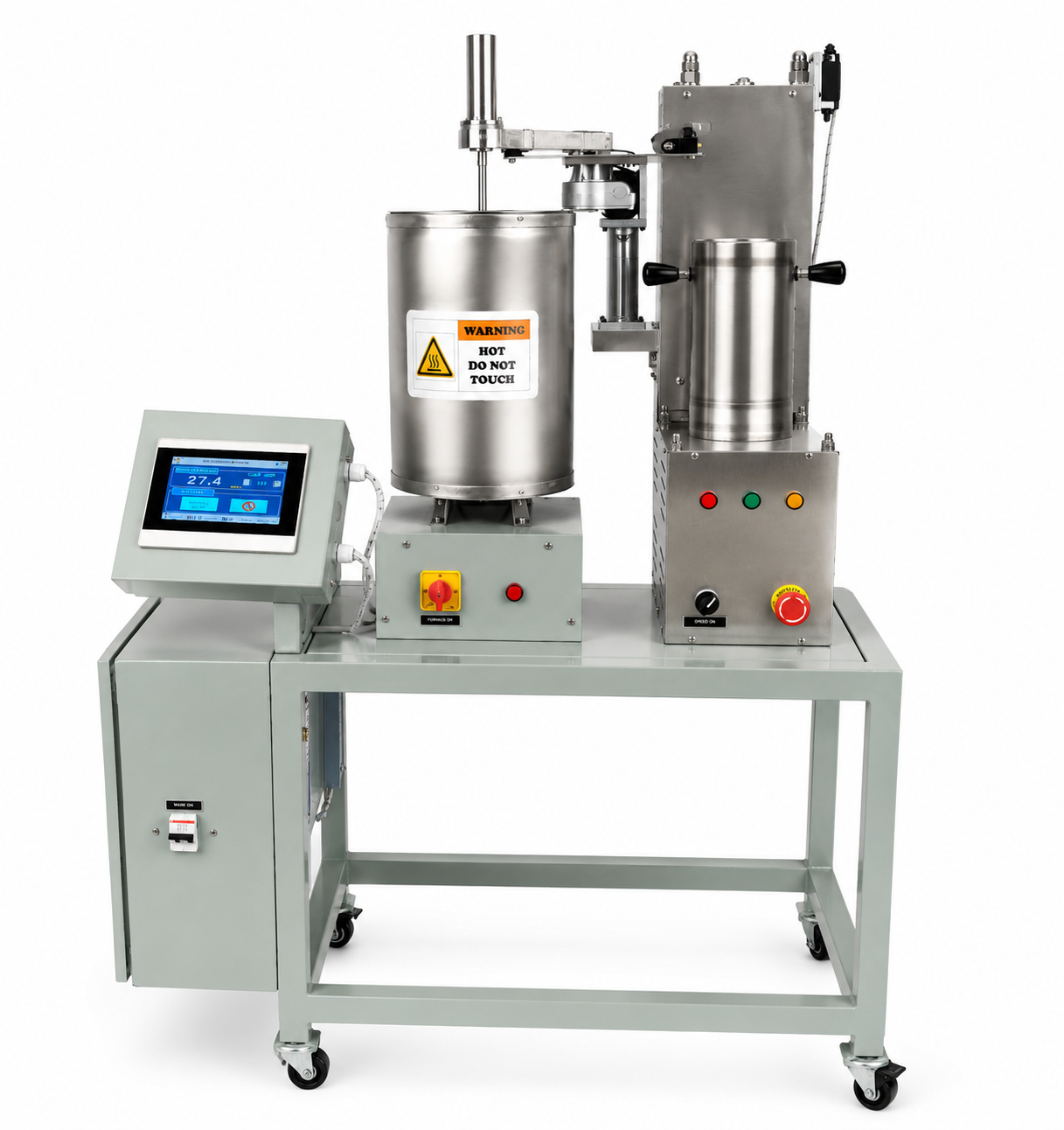
ASTM D7646 mandates the following apparatus — all requirements are met by ProVaC's Pro-Quenchometer platform.
Reported Parameters
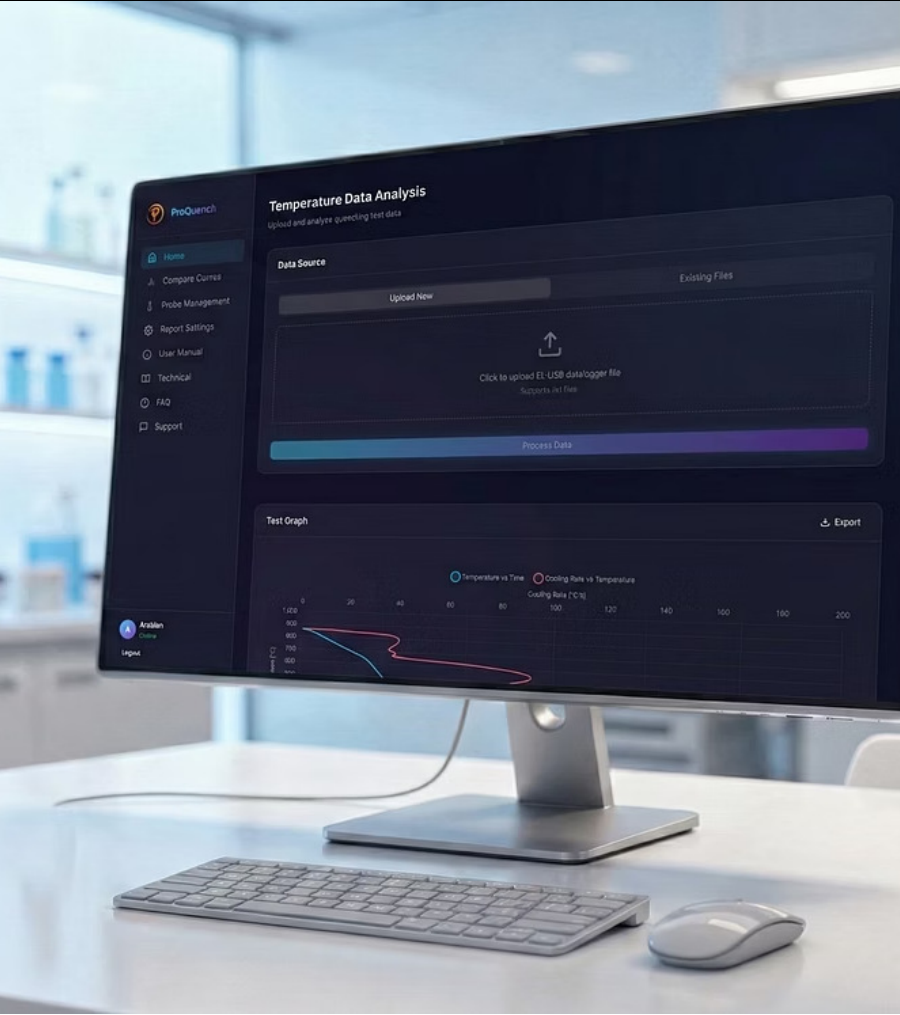
ASTM D7646 requires the following parameters to be calculated and reported for each test run. ProQuench software computes all of these automatically.
Reference Fluid Limits
These acceptance limits must be met when testing the calibration reference fluid — verifying equipment and probe are within specification.
Who Uses ASTM D7646?
From global quench oil producers to aerospace forging shops — ASTM D7646 is relied upon across industries where quenchant quality directly impacts part performance and process safety.
Automotive Aluminium Heat Treaters
Qualify polymer quenchants for T6 and T73 temper treatment of structural aluminium components — suspension parts, engine mounts, wheels, and chassis elements.
Aerospace Aluminium Manufacturers
Validate aqueous polymer quenchants for solution heat treatment of aerospace aluminium alloys used in fuselage frames, wing structures, landing gear, and fasteners.
Aluminium Extrusion Companies
Monitor and qualify quenching media for extrusion profile heat treatment lines. D7646 provides the standard test method for bath concentration and performance verification.
Aluminium Forging & Casting Heat Treaters
Ensure quenchant performance for age-hardening and T6 treatment of forged and cast aluminium components for automotive, industrial, and consumer product applications.
Polymer Quenchant Manufacturers for Aluminium
Develop and certify polymer quenchant formulations specifically optimised for aluminium alloys. D7646's silver probe test provides the industry reference data for product qualification.
Aluminium Metallurgy Research Labs
Study aqueous polymer quenchant performance for aluminium alloy R&D — particularly for novel alloy development where precise quench rate control is critical to achieving target microstructure and mechanical properties.
Does your industry rely on ASTM D7646? ProVaC has the right solution for you.
How ProVaC Enables ASTM D7646 Compliance
Every aspect of ASTM D7646 is directly addressed by ProVaC's Pro-Quenchometer, Inconel Probes, and ProQuench V3 software.
Silver Probe Configuration Available
ProVaC offers the silver probe adapter kit (≥99.99% purity, 10 mm × 30 mm) for ASTM D7646 testing on the standard Pro-Quenchometer platform — no new furnace needed.
500 °C Programme Control
ProVaC's furnace controller supports separate temperature programmes — including the 500 °C soak required for D7646 silver probe tests — alongside the standard 850 °C steel protocol.
Characteristic Temperature Calculation
ProQuench software automatically identifies the characteristic temperature (vapour-to-nucleate boiling transition) using the tangential-line-crossing algorithm defined in D7646.
Automotive & Aerospace Ready
ProVaC's aluminum testing configuration is purpose-built for automotive T6 heat treatment shops, aerospace component manufacturers, and aluminium extrusion facilities — the fastest-growing segment in quenchant testing.
Dual-Alloy Lab Capability
With two probe types (Inconel + silver) and two temperature programmes (850 °C + 500 °C), ProVaC enables a single lab to run both steel (D6200/ISO 9950) and aluminium (D7646) testing on one instrument.
How to Generate a ASTM D7646 Compliant Report
From probe preparation to signed PDF report — a complete ASTM D7646 test run with ProVaC equipment takes under 30 minutes.
Mount Silver Probe (≥99.99% Pure, 10 mm × 30 mm)
Install the pure silver probe with sheathed 1.0 mm Type K thermocouple at its centre. Silver's high thermal conductivity makes it the only probe material that accurately represents aluminium alloy cooling dynamics.
Activate 500 °C Aluminium Programme
Select the D7646 temperature programme on ProVaC's furnace controller. The furnace heats the silver probe to 500 °C ± 5 °C — significantly lower than steel standards — reflecting aluminium's solution treatment temperature range.
Prepare 300 mL Polymer Quenchant Sample
Fill the 300 mL ISO 3819 beaker with aqueous polymer quenchant at target concentration and temperature. The much smaller vessel (vs. 2 L for steel) is specified by D7646 for the silver probe geometry.
Transfer Silver Probe into Quenchant
The heated silver probe is transferred into the 300 mL bath and the cooling curve is recorded. The vapour blanket phase, transition point, and nucleate boiling phase are all clearly captured by the high-speed sensors.
Extract Characteristic Temperature (T_char)
ProQuench's D7646 algorithm identifies T_char — the vapour-to-nucleate boiling transition temperature — using the tangential-line-crossing method, and calculates the cooling duration t_char per the standard's specification.
Generate D7646 Aluminium Quenchant Report
A D7646 compliant PDF report is produced with the cooling curve, T_char, t_char, repeatability/reproducibility metrics, and DOP reference fluid acceptance comparison — ready for T6 heat treatment process documentation.
Products for ASTM D7646 Compliance
Ready to Achieve ASTM D7646 Compliance?
ProVaC's Pro-Quenchometer is precision-engineered to meet every requirement of ASTM D7646-23. Talk to our quenching technology experts for a tailored compliance solution.